
Can Human Gut Bacteria Bacteroides uniformis Help Reduce PFAS or “Forever Chemicals” from the Human Body?
PFAS, or per- and polyfluoroalkyl substances, earned the nickname “forever chemicals” for a reason. They accumulate in water, soil, non-stick cookware, waterproof fabrics, and even takeout containers. Scientists worry about PFAS exposure because these synthetic chemicals can lead to health impacts including hormone imbalances and liver issues. Researchers at the University of Cambridge and the MRC Toxicology Unit study whether a gut microbe like Bacteroides uniformis might absorb PFAS, carry them into the gut, and help remove them via feces.
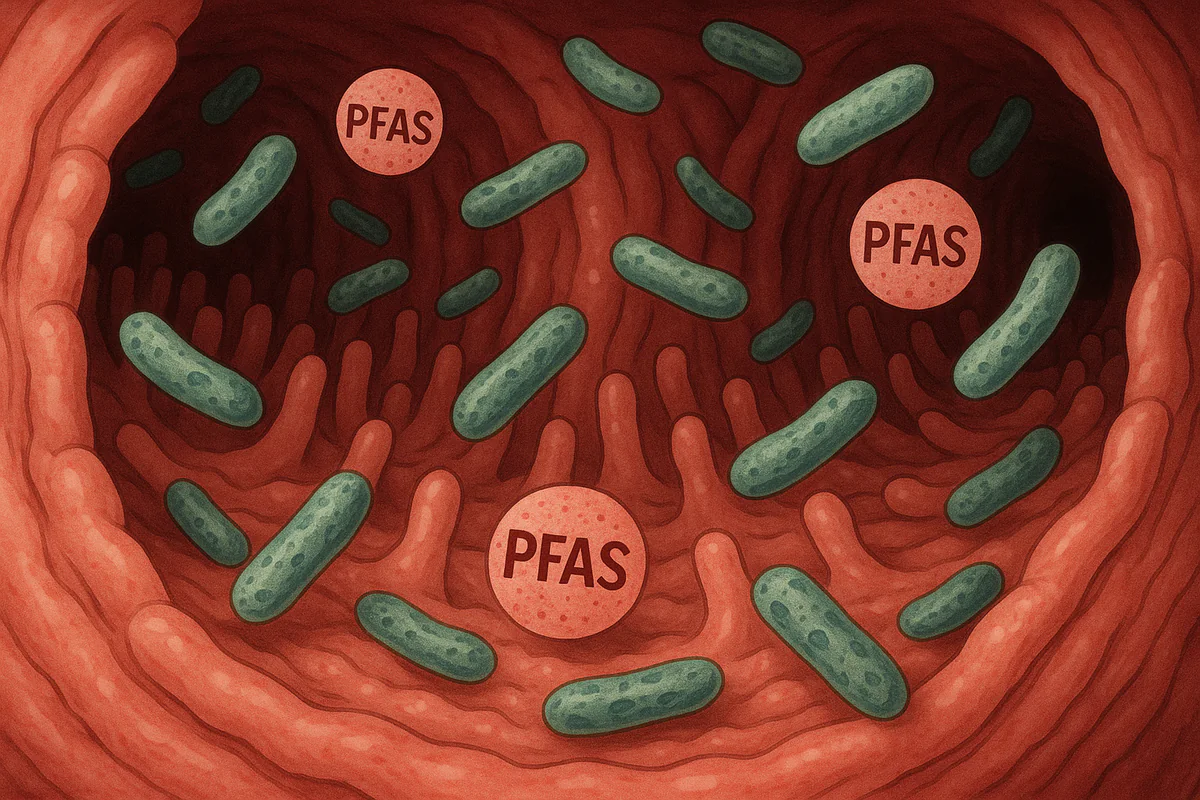
PFAS Bioaccumulation by Gut Bacteria
Researchers published in Nature Microbiology that certain species of human gut bacteria can absorb PFAS compounds. Bacteroides uniformis showed an unusually high capacity to bioaccumulate per- and polyfluoroalkyl substances at a range of concentrations. In mouse studies, a specific strain called B. uniformis CECT 7771 accumulated PFAS molecules and formed clumps inside its cells. Those mice excreted higher PFAS levels in their waste than control animals.
Lindell and colleagues used cryogenic focused ion microscopy to visualize PFAS aggregates in bacterial cells. That evidence supports a model in which B. uniformis acts like a living filter, soaking up PFAS and lessening absorption into the body.
How This Could Help Human Health
PFAS enter our systems when people eat contaminated food, drink tainted water, or use PFAS-containing items. Gut bacteria that can absorb PFAS mean fewer of these chemicals pass into the bloodstream.
PFAS exposure in humans already links to immune disruption, hormone changes, and other chronic conditions. If a microbe can remove PFAS naturally, the gut microbiome could become part of future strategies for reducing long-term levels of these harmful substances.
From Mouse Models to Real-World Solutions
Mouse studies confirmed that introducing B. uniformis reduced PFAS levels in stool samples. That encourages researchers to explore probiotic or functional food solutions using PFAS-absorbing strains. These next generation probiotics, sometimes called cambiotics, will require human trials to confirm effectiveness and safety.
Researchers must study how these live cultures affect gut bacteria balance in the human gut microbiome. They also need to test whether PFAS get stuck in clumps or simply mask as intracellular transport.
What You Can Do Today
Even though a PFAS-targeting probiotic does not yet exist, you can protect your gut along environmental lines:
- Choose filtered water to reduce PFAS exposure
- Limit non-stick kitchen and waterproof products in your home
- Eat high-fiber foods that support beneficial gut bacteria
- Monitor updates from the CDC or similar agencies on exposure levels
Researchers like Anna Lindell at Cambridge and Kiran Patil at the MRC aim to publish human studies showing direct PFAS reduction in people. Those results could shape future probiotic supplements.
Final Thoughts
Bacteroides uniformis shows early proof of concept for surrounding PFAS and expelling them through human waste. That ability may offer a biological way to ease forever-chemical buildup. Still, no probiotic or supplement currently provides this function for humans. Meanwhile, support your natural gut microbiome and avoid PFAS-laden materials until the science progresses.
FAQs About Bacteroides uniformis and PFAS
What is PFAS and why is it called a “forever chemical”?
PFAS, or per- and polyfluoroalkyl substances, earned their nickname due to their persistence in water, soil, and the human body. These synthetic chemicals, found in non-stick surfaces and water-resistant products, resist breakdown and pose serious long-term health risks.
How do gut bacteria interact with PFAS?
Some human gut bacteria, including Bacteroides uniformis, can attach to PFAS compounds at varying concentrations. Lab tests confirmed that these bacteria bioaccumulate per- and polyfluoroalkyl substances, forming clumps inside their cells and helping remove these chemicals.
What did mouse studies show about PFAS?
In mouse studies, researchers observed PFAS aggregation within bacterial cells and higher PFAS levels in feces, suggesting that B. uniformis could help remove toxins. Those animals processed PFAS better than controls, supporting a potential biological defense.
Could probiotic products help with PFAS?
Scientists consider B. uniformis CECT 7771 a promising probiotic candidate for PFAS reduction. These emerging cambiotics would work by increasing the capacity to soak up PFAS, but no commercial product exists yet, and human trials remain outstanding.
How does PFAS affect human health?
Exposure to PFAS links to organ damage, hormonal disruption, and immune system changes. Researchers at the University of Cambridge’s MRC Toxicology Unit, including Anna Lindell and Kiran Patil, highlight long-term health impacts as a major concern.
How widespread are PFAS chemicals?
PFAS appear in non-stick cookware, waterproof clothing, firefighting foam, food packaging, and many other consumer goods. These chemicals are so widespread that almost everyone shows trace levels in blood tests.
Is there a way to destroy PFAS in the gut?
Current research focuses on microbial PFAS excretion rather than destruction. While the gut bacteria trap PFAS and push them out in feces, complete breakdown of PFAS remains scientifically unverified.
Can dietary changes help reduce PFAS exposure?
While no “detox” plan exists, eating fiber-rich foods supports gut microbiota health and may help mitigate PFAS effects. Avoiding exposure sources like non-stick and waterproof items also reduces the problem of PFAS “forever chemicals.”