
Lab to Capsule: Current Human Trials Turning Bacteroides uniformis Into a Commercial Probiotic
Researchers continue to study how the gut microbiota affects human health. One microorganism that has drawn attention is Bacteroides uniformis, a Gram-negative, anaerobic bacterium found in the human gastrointestinal tract. It has shown early promise in regulating inflammation and metabolic disorders, including obesity-related weight gain and steatosis. The move to turn this organism into a commercial probiotic is now gaining traction.
What Makes Bacteroides uniformis a Candidate for Probiotic Use?
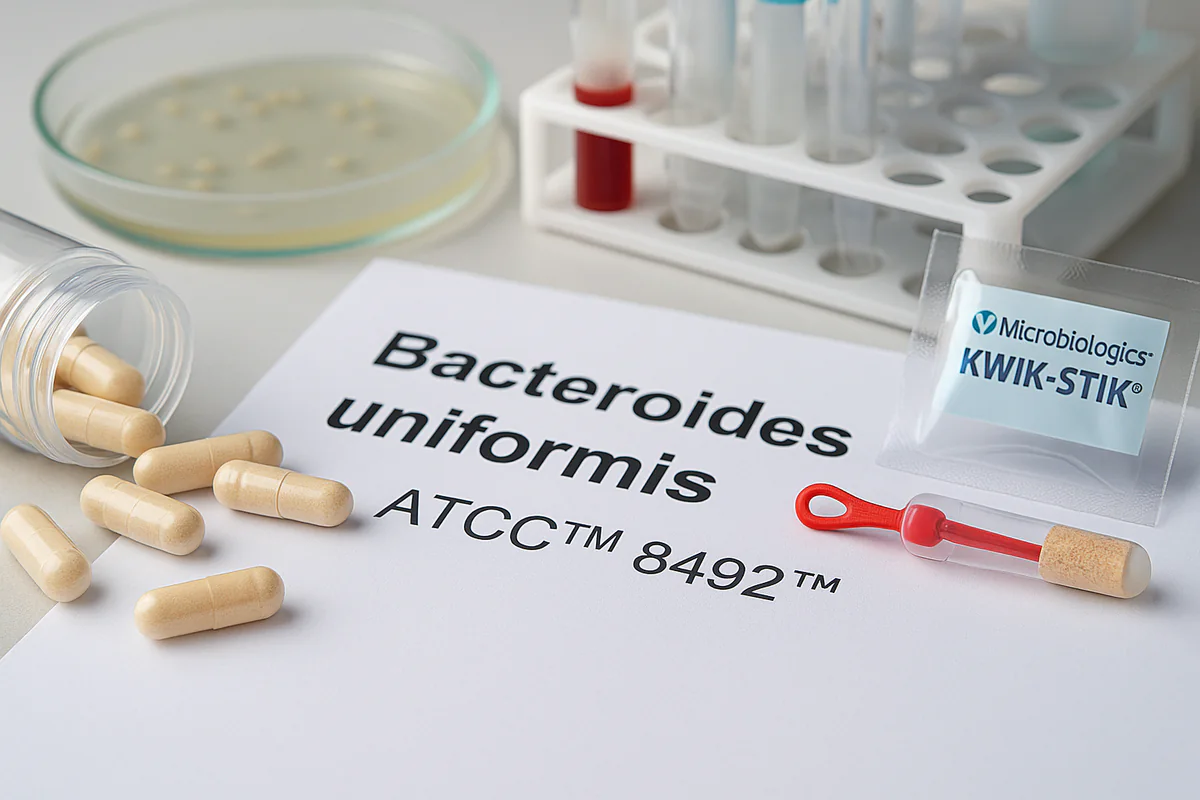
Bacteroides uniformis, particularly the ATCC™ 8492™ strain, has been associated with positive gut and immune responses. Scientists observed this bacterial strain’s ability to modulate cytokine activity in both human feces samples and mouse models. Due to its origin and purity, the uniformis derived from ATCC® 8492™ has become the subject of extensive research.
It’s important to note that Bacteroides uniformis ATCC™ 8492™ is available through licensed distributors only. The ATCC licensed derivative word mark and ATCC catalog marks are trademarks of ATCC, which controls the licensing and research use of these strains. Any use of products derived from this organism must meet their strict procedure, safety, and regulation standards.
From Research to Clinical Application
Lab studies begin with the growth and identification of the variant under anaerobic conditions. Researchers often use broth or agar plates to isolate and culture the bacteria. After this step, scientists prepare the strain using a lyophilized format, preserved in a vial to maintain viability for shipping and long-term storage.
The reagent is often transferred to laboratories where it can be revived and tested. Some institutions use the Microbiologics Kwik-Stik format to inoculate culture media for performance testing. These methods support consistency across diagnostic and clinical laboratories.
Commercialization Begins with Safety and Licensing
Before any live microorganism can reach the public, it must pass rigorous assessment. Companies must submit data on genetic identification, microbial characteristics, and antimicrobial resistance. The presence of protective traits and absence of infection risks form the basis for any future therapeutic use.
Products based on this strain are recommended for use in performance testing but are not intended for medical treatment yet. The CE mark symbol and other labels clarify the scope of use. Current versions are approved only for research use, not as over-the-counter supplements.
Clinical Trials Explore Real-World Impact
Ongoing human studies focus on metabolic responses, intestinal balance, and gut dysbiosis. Participants in these trials often receive capsules containing Bacteroides uniformis and then undergo biological sampling to evaluate their response.
One research group found that thiese live microbes might ameliorate gut barrier issues and reduce inflammation in the intestinal lining. Results showed slight alteration in microbiota composition and better regulation of immune markers. While still early, such results support the therapeutic potential of this variant.
Standardization and Product Development
Manufacturers looking to produce live microbes versions must follow protocols that maintain microbial viability and function. This includes controlling temperature, oxygen exposure, and pH levels during packaging.
Companies must also prove that their products are identical to the research variant, especially when they claim to sell products derived from Bacteroides uniformis ATCC™. These claims must respect trademark usage rules, as only those licensed to use these trademarks can legally market them.
Understanding the Limitations and Next Steps
While the science continues to move forward, several challenges remain. It’s unclear how long supplemented strains can survive in the human gut without ongoing intake. Researchers still study how gut bacterial strains like this affect chronic metabolic conditions in the long term.
Another concern is public misunderstanding about what “probiotic” really means. In the context of Bacteroides uniformis, the term reflects its potential to serve as a therapeutic microorganism. It does not suggest approval for treating medical conditions-at least not yet.
Future Use Cases and Commercial Opportunities
Should current studies confirm efficacy and safety, Bacteroides uniformis may become part of functional foods, supplements, or even next-generation therapeutics. Some researchers propose combining it with dietary protein sources or delivering it through smart capsules that dissolve under specific gut conditions.
The possibility of using this organism for managing metabolic disorders, modulating gut ecology, or supporting the immune system has created interest across biotech firms and academic institutions. The request for quote on product batches continues to grow as more clinical labs look to participate in larger trials.
Final Thoughts
The push to bring Bacteroides uniformis into commercial settings reflects how far microbiome science has come. Scientists now track its effectiveness not just in petri dishes but in real-world human models. With the right partnerships, consistent shipping conditions, and validated lab instruction, this variant may someday move from lab shelves to pharmacy aisles.
If successful, this project may redefine how the health sector views gut probiotics-not just as general health aids, but as targeted microbiome interventions backed by licensed strains, validated methods, and regulatory oversight.